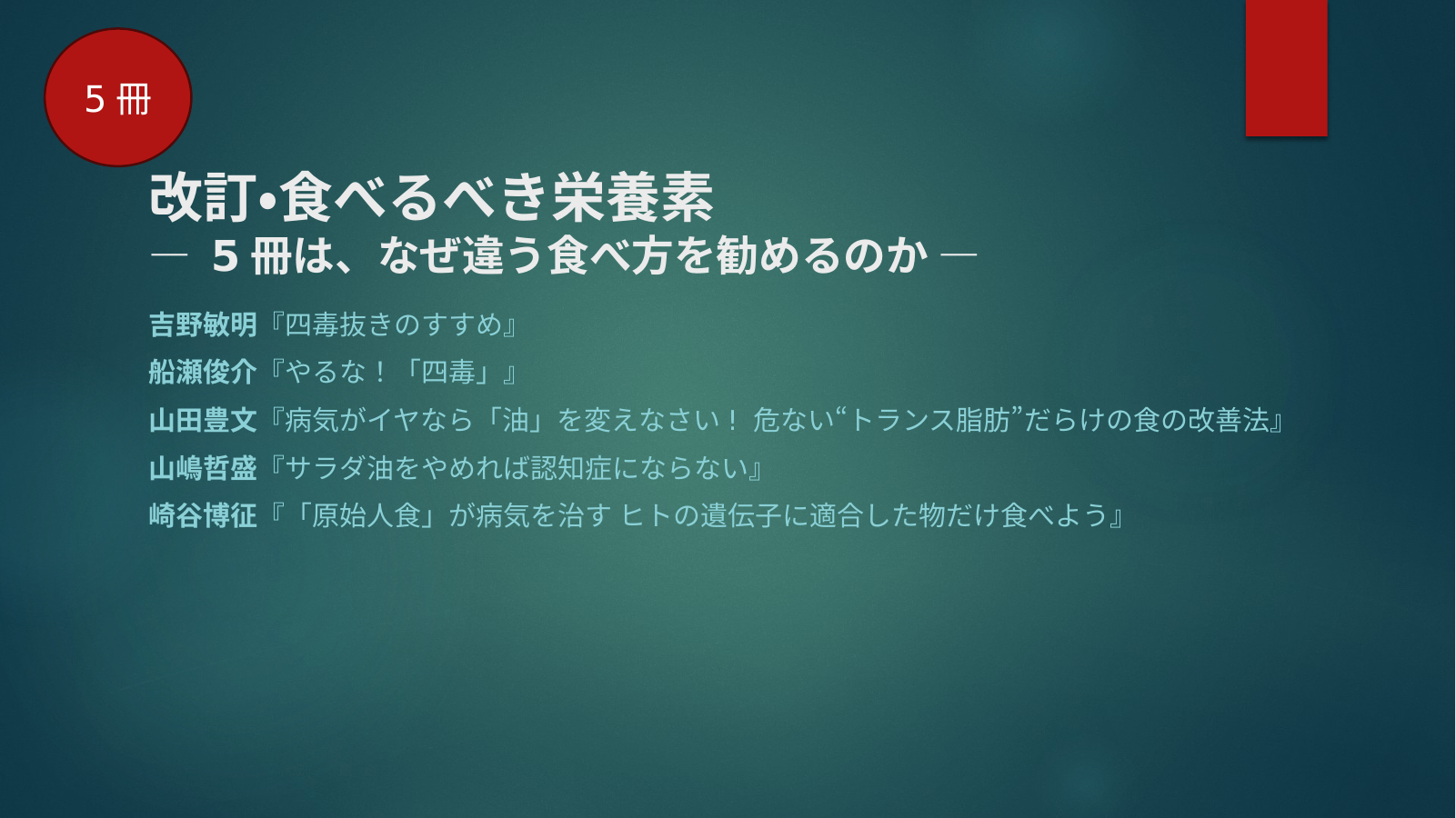
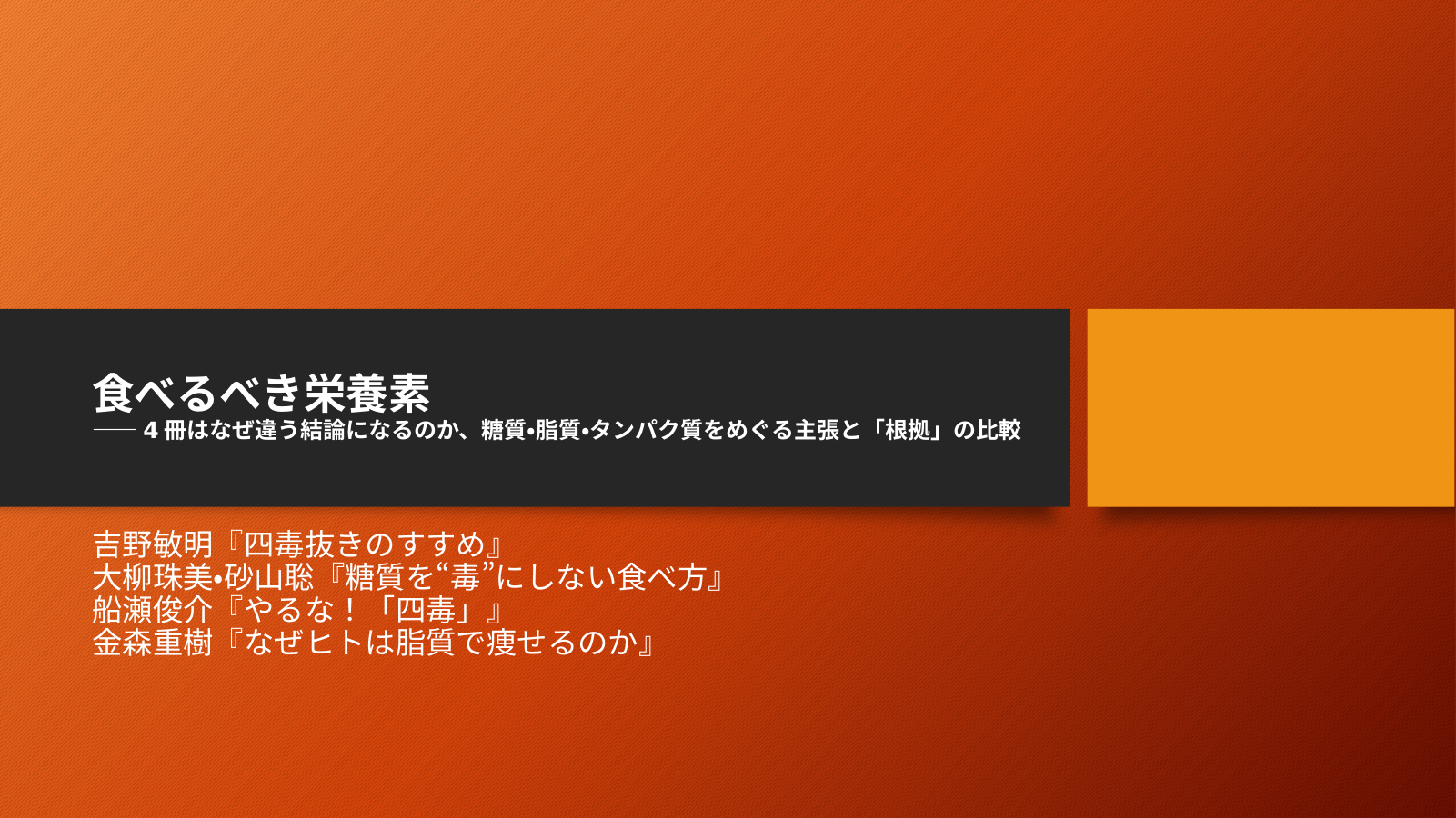
A few months ago (around 2025.4), I heard from a friend that there is a “four poison removal” health method. It seems that his physical condition improved after adhering to that method, and instead of being healthy by paying a lot of money to take supplements, he becomes healthy by devising what he eats every day (not eating anything containing the four toxins).
When I was told about those 4 types, I thought I couldn't do it, but I tried removing “vegetable oil,” which is one of them. The vegetable oil used to stir fry vegetables at breakfast is covered by oil from meat (pork, beef). To prevent the frying pan from burning, when you add water, the vegetables soften nicely, then add canned boiled fish (yellowtail, mackerel, saury, salmon), tofu, and eggs to it.
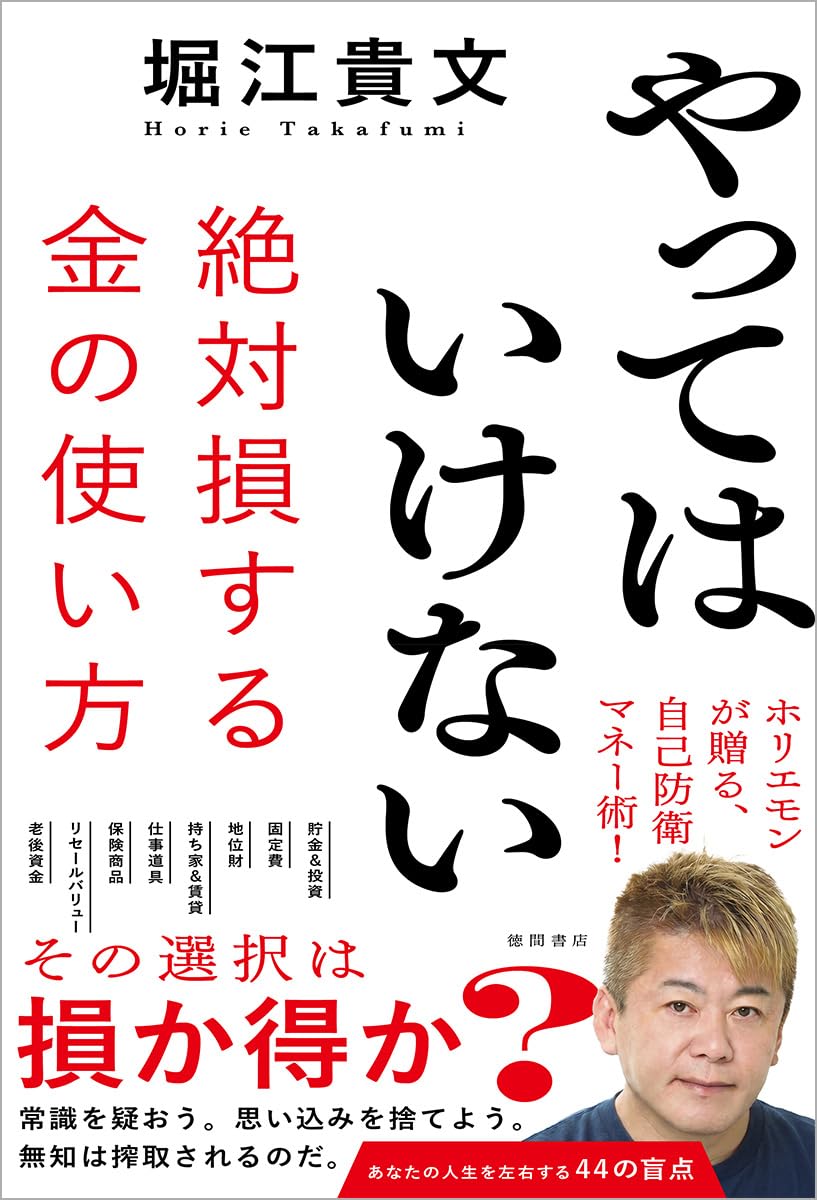
I got rid of one of the four poisons and my physical condition improved, so I found this book because I wanted only to gain knowledge about the other three types. Those three are “wheat, dairy products, and sweet things,” and I think it's difficult to remove them all at once, but when eating at home, regardless of eating out, I feel that I want to try cutting them out as much as possible and experiment with my own body.
Below are the points I was concerned about.
・Even if it is organic food, there are blind spots in modern food, and modern food includes many things that Japanese people have historically not eaten. Foods that do not suit the constitution of Japanese people have created many diseases called modern diseases (p2)
・4 definitions of poison, 1) gluten, which is a type of protein contained in flour, 2) “vegetable fats with unsaturated fatty acids” such as olive oil, linseed oil, rapeseed oil, etc., 3) “dairy products” such as milk, yogurt, cheese, and butter, 4) sweet things such as sweets, juices, and fruits (p3)
・If you attack the mucous membranes of the nose, chronic rhinitis, asthma, if you attack skin cells, atopic dermatitis, if you attack chondrocytes, rheumatism, nerve cells, Parkinson's disease, if you attack the mucous membranes of the large intestine, Crohn's disease, ulcerative colitis, these diseases always improve symptoms by completely cutting off wheat, and it is not enough to just reduce your intake, so it's important to completely cut them off (p27)
・Gluten intolerance is diagnosed from symptoms; if you stop eating bread and have the following changes, you are gluten intolerant, 1) you are gluten intolerant, 1) your fatigue has disappeared, 3) your sleep has deepened (p46) you can get rid of edema (swelling) when you stop wheat (p52), there is a high possibility that wheat substitutes use a lot of food additives to produce a flavor close to noodles made with flour (p59)
・Unsaturated fatty acids (smooth oil) with double bonds cause neuralgia, arteriosclerosis, stroke, myocardial infarction, subarachnoid hemorrhage, cancer, schizophrenia, Parkinson's disease, Alzheimer's disease, etc. (p66)
・In Japan, fish oil or whale oil were almost never used in cooking, because fish could be eaten as it is (p71) Since ancient times, Japanese people have ingested oil and fat from shellfish, shellfish have a ratio of almost 1:1, and have a good balance of fats and oils (p72)
・Taking too much vegetable oil may cause motor impairment, Parkinson's disease, Alzheimer's disease, mosquito disease, olfactory disorder, lower back pain, knee pain, etc. (p81)
・Since Japan has signed an agreement with the United States that vegetable oil must be consumed, the use of trans fatty acids cannot be stopped (p102) There are lacto ice, sweet bread, margarine, and fresh coffee as those containing trans fatty acids (p103)
・Osteoporosis is caused by ingesting too many carbohydrates, and phosphoric acid is needed when breaking down sweet things, that is, carbohydrates. Phosphoric acid dissolves from bones, so if you take too much sugar, your bones will become brittle (p144)
・If you have breast cancer, endometrial cancer, ovarian cancer, or prostate cancer if you are a man, you should not drink soy milk; if you are a healthy person without illness, there is no problem eating soy milk/tofu; it is not good to eat large amounts every day (p159)
・The Tokugawa shogunate managed it well so that Japanese people did not want sugar, but when they lost World War II, that regulation was lifted (p170)
・When choosing ingredients, the cooking method for fresh food and Japanese food that has not been processed as much as possible, not salted foods, canned foods, or frozen foods, and Japanese food that has not been manipulated by humans as much as possible is “boiling/grilling/steaming” (p195)
・The four toxins have the following transformation ideas: 1) gluten (bread, spaghetti) → white rice, brown rice, millet rice, 2) vegetable oil → “simmering/steaming without using vegetable oil” instead of frying or frying; 3) dairy products: not eaten historically; 4) sweet things → “honmirin” fruits, sweet potatoes, and corn as seasonings are extremely high in sugar (p197)
・4. Many people lose weight when they start removing toxins, because carbohydrates in rice do not increase fat, and “vegetable oil” is necessary in order to gain weight (p200)
・As for meat, there is no problem if it is domestically produced “beef, pork, or chicken” that Japanese people eat. American products contain hormones and steroids, so they should be avoided (p204) When meat and vegetables are boiled in hot water, such as boiled in water, pesticides, antibiotics, and hormones dissolve into “boiled juice,” so boiling is recommended rather than grilling. As a precaution, do not close the pot to porridge, and do not drink boiled juice (p205)
・As for seafood, blue fish such as “sardines, horse mackerel,” which are eaten as sashimi, grilled fish, or boiled fish, are recommended, and sardines are especially recommended because they can be eaten with the bone (p206)
・ As for vegetables, avoid sweet potatoes, taro, pumpkins, and corn; the sugar content is too high. Seaweed has been taken as a plant, and they have eaten wild vegetables, mushrooms, potatoes, and wood ear mushrooms, and there is no custom of eating vegetables raw. Things that are cooked have been eaten by boiling them in miso soup or hot pot (p207)