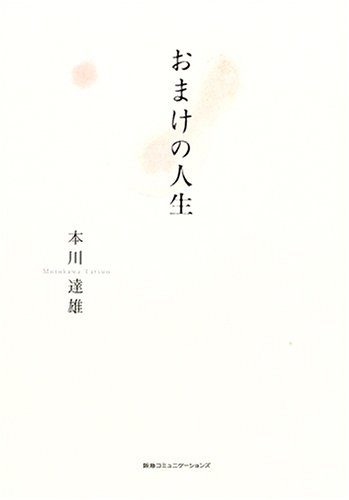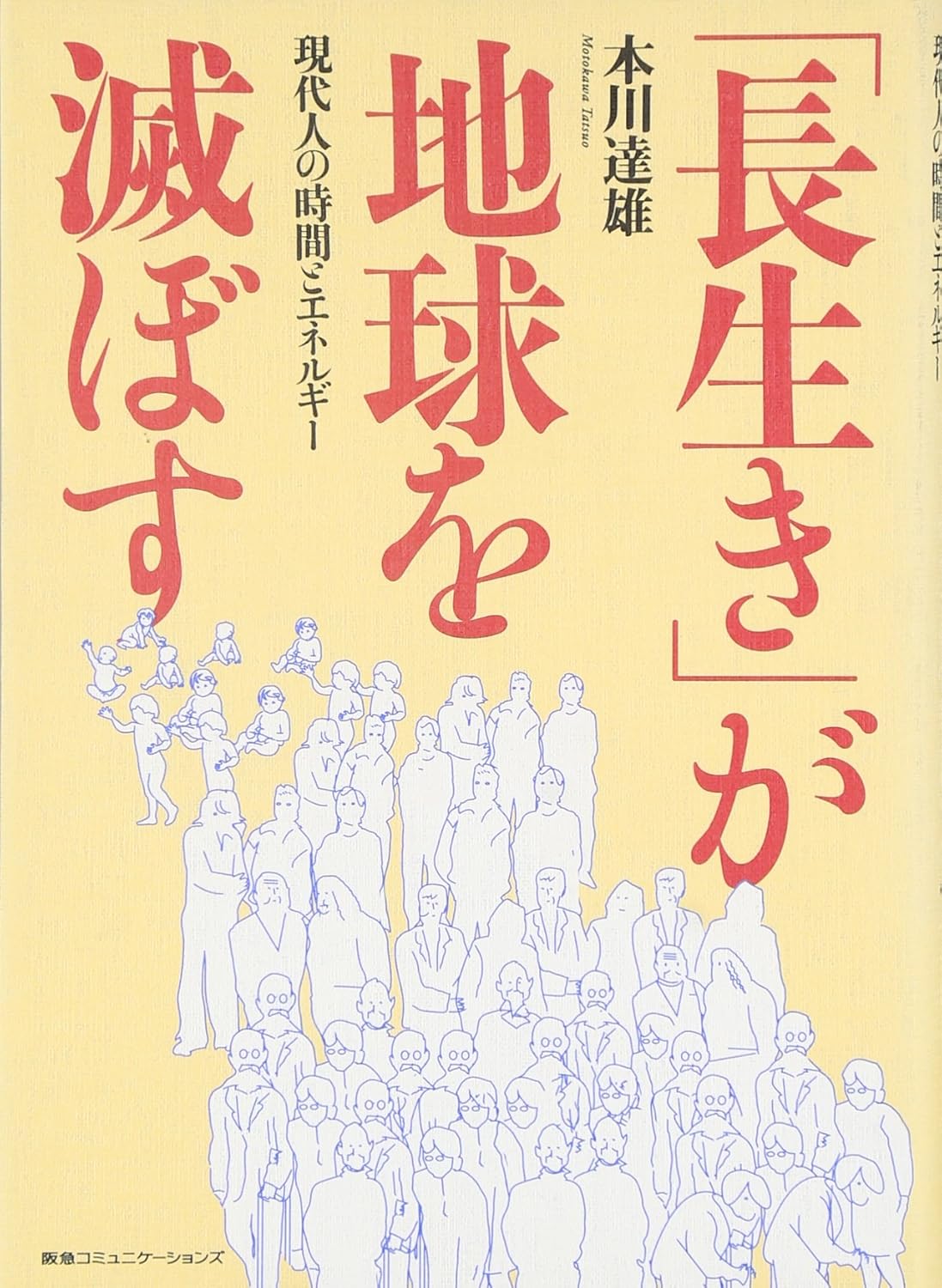
I've finished reading the book for the past 20 years, and I'm working on writing out the points I was interested in in the book, calling it a “review” so as not to forget the content. There are also people who say that there is no meaning unless you replace it with your own words, but by drawing the contents of the book steadily, you can look back at it later and have your own opinions on it, so I'm thinking of continuing this method.
Well, I'm supposed to write a review about 12 years ago, but I remember that the first time I read it was around 2005. It's a memorable book that makes me think my “outlook on life” changed after reading the book.
Below are the points I was concerned about.
・The major problems facing Japan today can all be viewed as a matter of time, so a correct way of looking at time is necessary, time and energy are related, and time changes depending on energy consumption (oxygen consumption) (p13)
(Comment) Time for each organism changes depending on oxygen consumption
・The number of heart beats 1.5 billion times in a lifetime, and elephants that live 70 years and mice that die in 1 year have the same 1.5 billion times (p14)
(Comment) This was a shocking fact, the number of heart beats is the same
・In a crowded train, when people around you regard it as an object (sleeping), the population density drops a lot, and as a result, there is no need to feel abnormal time or travel distance (p26)
(Comment) I wonder if sleeping on the train and getting carried away with smartphones is to prevent stress
・Time is by no means constant, and time changes between animals; time is closely related to energy; this is biological time (p28) house mice beat 600-700 times per minute; small-sized animals have short cardiac cycles, which lengthen as size increases (p33)
・When body weight doubles, time becomes 1.2 times longer, and body weight is 10 times 1.8 times, and this is proportional to the 1/4 power. This applies to almost all animal worlds (p36, 41)
(Comment) It's an amazing point that the time changes if the animals are different
・When you're a child, your heart moves faster than an adult, and it takes longer when you become an adult (p48)
・Energy consumption per body weight is higher in children and decreases as they get older, which means children's time progresses fast and adults time is slow (p141)
・Older adults consume 1/2 to 1/3 of their energy compared to children, and time is 2 to 3 times slower (p190)
(Comment) Children and adults have different times
・We recognize the world with logarithms, and only when the digits are different (multiplied by 10) do we feel that this is really different (p121)
(Comment) Recognize differences by 10x instead of 2x
・Clocks that changed the way time progressed were used until the Edo period, and since that time was spent for a while based on sunrise and sunset, the length of time per moment changed (p139)
(Comment) The irregular time law, this may be suitable for people who live naturally
・If you think of metabolic rate as the speed of time, 1 second for humans, 0.15 seconds for mice, and 2.7 seconds for elephants have the same weight, 1 hour for mice is 18 hours for elephants, and 1 day for modern people is 1 month for Jomon people, the metabolic time is short even though they work using a lot of energy, and the opposite is true (p141)
(Comment) A day for a modern person becomes a month for a Jomon person, and if I apply this, what would happen to my 10-year self and now
・In order to live a meaningful bonus life, 1) change the way you look at time, 2) think that the elderly also have an obligation to work (p222)
(Comment) Working is important