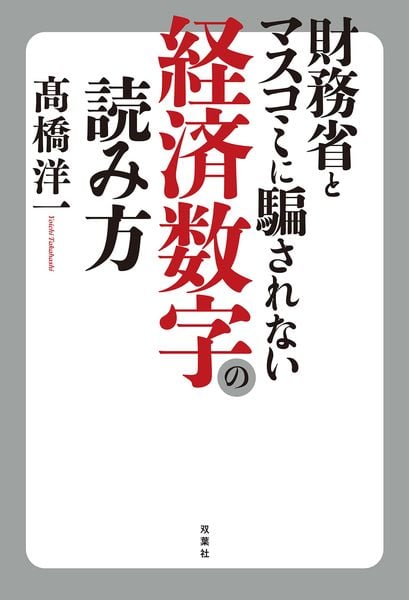
・It may be difficult for petroleum to enter due to the Middle East conflict, but since electricity generation is only 7% dependent on petroleum, there is no significant impact on power generation (p7)
・It is China that carries the most oil through the Strait of Hormuz, and Iran is not attacking Chinese ships. As for Iran, if mines are laid, Chinese tankers will not be able to pass through the Strait of Hormuz (p10) The real mission of the mass media is to report that even if Iran's Revolutionary Guard Corps fights hard, the world economy won't flutter (p12)
・Since America succeeded in suppressing Venezuelan oil due to military action in January, China, which imported oil directly from Venezuela, could only obtain Venezuelan oil via America (p17)
・Japan's finances will not fluctuate due to gasoline subsidies of around 280 billion yen, it is okay to know the following 3 things: 1) the depreciation of the yen is positive for the Japanese economy, 2) Japan's finances are healthy and there is almost no possibility of bankruptcy, and 3) the Japanese economy will grow with responsible and aggressive finance (p40)
・The exchange rate is determined by the ratio of the supply of dollars (= monetary base) to the supply volume of yen, so that prices are determined by the balance between money and goods, if the supply amount taken is higher than yen, the relationship becomes cheaper, and vice versa (p43) According to Mr. Takahashi's calculation, it is about 120 yen per dollar when viewed in terms of the balance between current supply amounts of dollars and yen, and in the future the supply of yen will increase due to aggressive finance with high municipal administration, so theoretically the yen will depreciate even more than that It's going to happen (p46)
・Buying dollars by central banks means buying dollar assets by selling assets denominated in yen or euros, buying US bonds instead of buying dollar bills (p47)
・The Japanese government benefits the most from the depreciation of the yen, and the government holds huge foreign currency-denominated assets in the “Special Account for Foreign Exchange Funds.” There are 141 billion dollars = 22 trillion yen or more as of the end of 2026/2 (p50)
・According to the Bank of Japan's balance sheet, assets are 763 trillion yen, debt is 713 trillion yen, and net assets are 50 trillion yen, but Bank of Japan notes and current accounts included in debt are not economically regarded as liabilities due to extremely low interest rates, and the total of these is 649 trillion yen, so when considered by the integrated government, excess debt is 1 trillion yen. Furthermore, tax collection rights, which are government assets that do not appear on the balance sheet, are added, and the value of this asset is estimated to be 600 trillion yen (P53)
・Financial institutions and investors use government bonds to trade financial products such as stocks and corporate bonds, etc., and when an investor sells A shares and wants B corporate bonds, they change a shares to government bonds and then obtain b corporate bonds with those government bonds. If it's a national bond, it can replace money, it is also convertible and the country guarantees interest, so this interest comes a lot (P64)
・Section 5 of the Finance Act states, “Let the Bank of Japan undertake the issuance of all public bonds, and you must not borrow them from the Bank of Japan when borrowing loans. However, in cases where there is special freedom, this does not apply within the range of amounts resolved by the Diet.” This law is nothing but a law to prevent Japan from having military power due to GHQ (P74)
・It is 2027 that the effects of responsible and active finance of high municipal authority will appear in earnest, and the 2026 budget was set up during the Ishiwari administration (P101)
・2026/2 was a revolutionary event where the JAMSTEC took center stage and succeeded in becoming a microcosm of rare earths from the seabed of Minami-Torishima, 1900 km away from Tokyo, within the framework of a strategic innovation creation program (P106)
・Previously, the central bank determined interest rates for loans to private banks to guide interest rates, but now it is an open market operation; for example, when the interest rate is set to 0.75%, the Bank of Japan applies upward pressure on interest rates by selling bonds and notes so that the interest rate is absorbed from the market, and conversely, funds are supplied to the pillar to lower interest rates (P126,133)
・It is safe to think that an increase in policy interest rates when the price index is not growing will hinder the growth of the Japanese economy, and the price index is a core core (index obtained by removing food and energy from the comprehensive price index) (p134,153)
・The unemployment rate is around 2.5% and the inflation rate (core core CPI) 2%, which is the most balanced relationship between employment and inflation (P154)
・Changing the 1.03 million yen barrier to 1.78 million yen is also a meaningful number; the minimum wage is 1.73 times higher from 1995 to 2025, the deduction amount for 1995 is 1.03 million yen, so multiplying by 1.73 is 1.78 million yen, but this is only 2026 and 27, and the total amount of special cases of 470,000 yen will be reviewed from 2028 (P165)
・If you work from age 20 to age 60, you have worked for 40 years, and since the average life expectancy is 80 years old, then if you pay 20% of your annual income to your pension for 40 years, which becomes 80%, you can get 40% of your annual income in 1 year. Since the company pays half, you will pay 10% of your annual income for 40 years, and after retirement, you will receive 40% of your average annual income when you worked. Since 40 years x 20% = 40% x 20 years, bankruptcy is impossible (p217)