In April of next year, 25 years will pass since I became a member of society. What has been said all this time is that there is a possibility that the Japanese government will go bankrupt. At least for me, I was interested in that kind of book, so I read many of them.
As a new employee, I was surprised, and there was a time when I seriously thought about what would happen to Japan and what I should do while reading those books. More than 20 years have passed since then, and the number of bankrupt books has decreased, and instead, the number of books called “Why Doesn't It Go Bankrupt, and What Indices and Data Can This Be Explained” has increased, and as far as I can see, it has reached a current situation where there are no books that refute it.
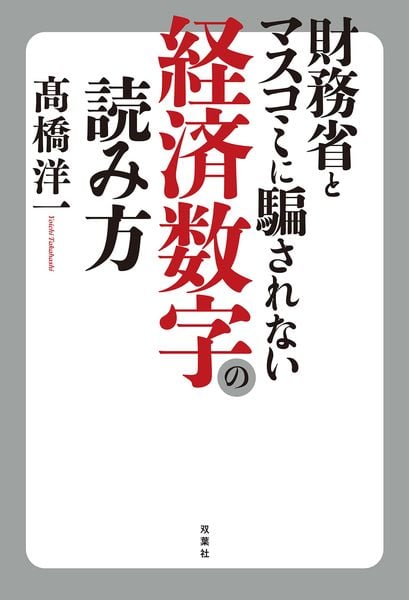
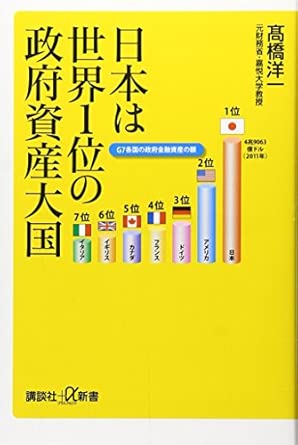
Well, this book is a book that directly fights against the content “how much is the debt of the Japanese government per citizen,” which is often said in the streets. The net debt (= debt - assets) of the Japanese government is not that large, and Japan's government assets rank first above America in the G7, and there are many things that can be cashed out with those assets, and it is stated that securitization etc. can be used even for things that cannot be made.
Also, they have specifically taken up and explained things that are unnecessary in a number of special accounts. As a matter of fact, he is a former Ministry of Finance official who only created a balance sheet for the Japanese government for the first time. I found what he said persuasive.
Previously, it was a book written by someone else, and there was an argument that once the buried treasure has been accumulated, there is no next, but Mr. Takahashi, the author of this book, was also convinced by the idea that buried money will not go away unless the current method of budgeting (recording extra money for fear that the budget will run out) changes.
Mr. Takahashi's book may be troublesome for the Ministry of Finance and some people who currently enjoy profits, but I thought it was good news for the common people and people who want to normalize the Japanese government's finances.
Below are the points I was concerned about.
・An inconvenient truth for the Ministry of Finance is written on the national balance sheet, and as of the end of 2012.3, total liabilities are 1088 trillion yen and total assets are 629 trillion yen (p4)
・Japan's net debt is about 459 trillion yen, which amounts to 85% of GDP, and this will be filled by Japan's tax rights (p19)
・Even at the time of the Great Hanshin-Awaji Earthquake, most of the expenditure was covered by issuing 9.2 trillion yen of government bonds (p39)
・The total amount of government bond issuance plans issued in fiscal 2011 is 170 trillion yen, new: 44 trillion yen, refinancing: 111 trillion yen, financial investment bonds: 14 trillion yen (p45)
・The income replacement rate is what percentage of people receive as a pension during active duty, but Greece: 96%, Japan: 34%, and G7 countries outside of Japan are 48% (p54)
・The full amount of government debt expenses cannot be used for interest payments, and in fact about half of the amount is accumulated, and the rest is stored in a fund called debt reduction accuracy, this part is not conveyed by the mass media (p62, 65)
・Of the financial assets of 428 trillion yen, pension reserves that the Ministry of Finance cannot reverse, about 110 trillion yen, and the remaining 300 trillion yen should sell quickly (p92)
・Other special account reserves are also things that are piled up and accumulated every year (p104)