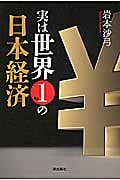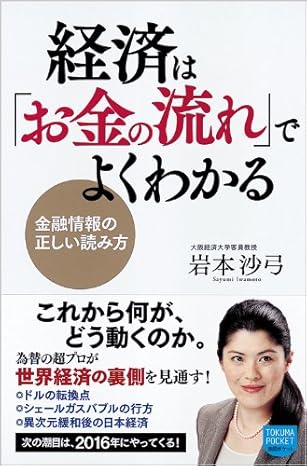
While books such as Japan going bankrupt every time the balance of the Japanese government's national debt is announced, one person who has been completely denied this for a long time is Mrs. Iwamoto, the author of this book. Since she has only been involved in dealing with government bonds, she has explained in detail how interest rates on government bonds are actually affected (p144).
Furthermore, she explains what kind of growth America and Europe will achieve based on the shale gas revolution currently underway in America (2013). In particular, it clearly pointed out environmental issues during shale gas oil production (p41), and it was the first book I read.
It was decided that the Tokyo Olympics would be held about 2 weeks ago (2013.9), but how will this affect the Japanese economy? I would also like to look forward to her new work, which will be published in the near future.
Below are the points I was concerned about.
・Problems with shale gas in the United States are that toxic gas is generated during mining, causes ground subsidence, requires large amounts of water, and is contaminated with toxic substances when returning used water to strata (p41)
・If the Bank of Japan mitigation measures decided by 2012.12 are implemented until the end of 2013 as scheduled, the GDP ratio of total assets of government bonds held by the Bank of Japan is 40% or more, which is more aggressive than 25% of the Fed. (p55)
・The subprime crisis settled down and after 2010.8, China changed to a currency basket system again, and the fluctuation range limit was relaxed from plus or minus 0.5% to 1.0%, and considering the initial 0.3%, the Chinese authorities issued a sign that they don't mind if the Chinese yuan appreciates (p70)
・What bothered automobile manufacturers around the world the most after the East Japan Earthquake was that production plants for the automotive paint pigment “Xirallic” were shut down, and this was produced only at the Iwaki City Obama Plant (p81)
・What is common in discussions about government debt crashes leading to financial bankruptcy is that there is a lack of discussion about the whereabouts of yen left on hand after selling government bonds, and money does not disappear (p100)
・Of government debts, it is necessary to consider whether they can be repaid as quickly as possible is over 425 trillion yen (p112) of special government bonds
・Of the three numbers (current account surplus, net external assets, foreign exchange reserves) that the Ministry of Finance did not go bankrupt in 2002, the current situation is that anything other than the current account surplus is getting stronger (p131)
・Variable interest rate government bonds have been issued in 3 types (15, 10 years, price-linked bonds), and the current balance is 52 trillion yen (total total: 617), and even if interest rates change, it affects government interest payments 10% (p135) of the total
・In order for a tulip bubble to occur in the Netherlands, the existence of a large amount of money is necessary, and the Federal Republic of the Netherlands, which became independent from Spain after the Eighty Years' War, was thriving in fragrance trade by the Dutch East India Company (p158)
・The biggest reason I wanted to incorporate Greece into the EU is that there are geopolitical things related to security, and not only is it close to Russia, but it is also a pipeline route that exports crude oil and natural gas from the Caspian Sea and the Black Sea (p201)
・1998.1 Russia carried out denomination, set 1 dollar = 6.2 dollars, switched to a management float system that allows 15% fluctuations up and down, and suspended payments for 90 days on 1998.8.17 (p242)