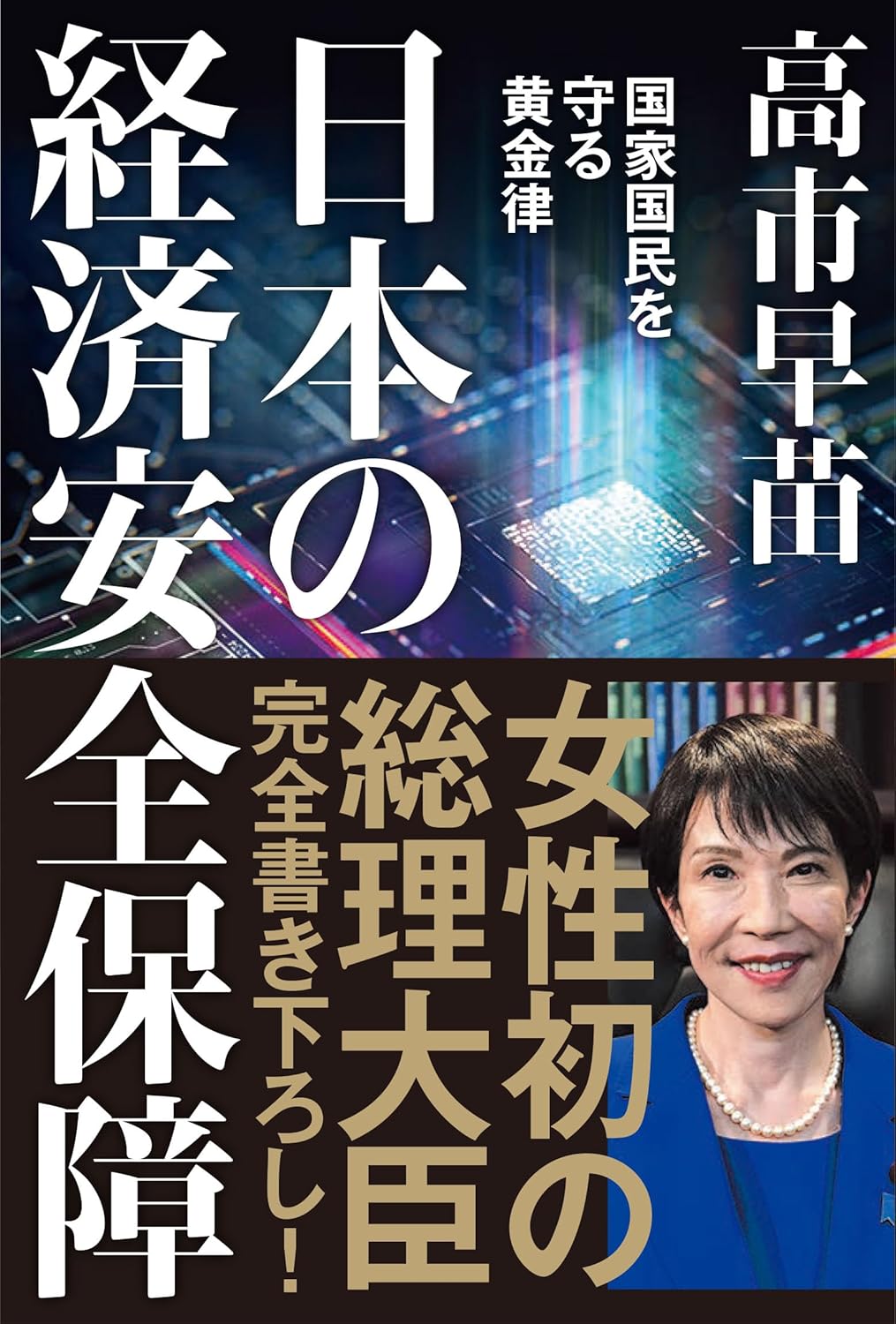
・ “Economic security” is the prevention of acts that harm the safety of nations and citizens carried out in connection with economic activities (p16)
・Computers, internet, GPS, microwave ovens, food wraps, canning machines, cleaning robots, etc. that are familiar to our lives, and the results of research and development carried out by Japan's Ministry of Defense, which were originally born from national defense technology development, have also been returned to society as spin-offs, leading to the strengthening of Japan's technical and economic capabilities. In addition to AI, quantum, unmanned (drone), and sensing, which have been attracting attention in recent years, technologies related to information communication, information processing, information security, materials, etc. have the potential to make the economy and society convenient, rich, and secure, and at the same time bring about essential changes in the security environment when used in the military (p18)
・The bill for the Economic Security Promotion Law was regarded as an “important broad bill,” and after discussions at three expert meetings starting in 2024/11, the final summary was announced in 2024/1, and after each party examined the bill in February, a cabinet decision was made on 2024/2/27, and submitted to the House of Representatives on the same day. An important broad bill is one that is designated based on the Parliamentarians' Steering Committee Board of Directors agreement as being important and the content extends to the latter half of the bill on stage, and that the Prime Minister should respond at the plenary session and commission committee (p28)
・Actually, countries that have enacted a wide range of laws relating to economic security, such as Japan's “Economic Security Promotion Law,” have no examples in the world, so when prime ministers and cabinet ministers from other countries visit Japan, they are often asked about the details of the law. I had no direct counterpart ministers in my allies and comrades, so I have held talks with the competent ministers of each country for each case (p33)
・ According to trade statistics for 2021, the degree of dependence on battery metals (lithium, nickel, cobalt, graphite, manganese) and rare earths, which are important minerals, is almost 100% overseas (p91), so the Japanese government is ultimately aiming to build a rare earth production system using Minami-Torishima as one base. Also, I would like to steadily advance efforts toward future mining zone establishment, that is, industrialization of domestically produced rare earths (p93)
・ In 2022/9, the “Economic Security Important Technology Development Program Research and Development Vision” was decided by the Economic Security Promotion Council and the Integrated Innovation Council after deliberation at the National Security Council. Together, after sorting out the 3 elements and 4 areas of technology that can be supported by the country, 27 important technologies that should be supported were shown. The four domains are 1) the marine region, 2) the space/aviation area, 3) the trans-domain cyberspace area, and 4) the biological domain (p140)
・There is generally a trade-off between drone flight distance and payload (maximum load capacity), and there are technical issues in balancing long-distance flight and high payload transportation (p150)
・Observation of wind conditions and detection of objects in flight routes are important for drones that are susceptible to wind conditions. As a unique technology, Japan has advanced “Doppler lidar” technology that can also observe wind conditions, and it has technology that surpasses other countries in terms of software technology that eliminates various noises when observing reflected light and is the core of Doppler lidars that analyze weak scattered light. This technology is small yet can be raised to an observation distance of about the same level as a large Doppler lidar, and the laser can be made smaller (p156), and Japan's excellent quasi-zenith satellite, which can also be positioned with an error of 6 cm, is expected to play an active role in autonomous driving and smart agriculture in the future (p159)
・Japan has the most advanced “orbital approach/capture technology” in the world. JAXA has acquired rendezvous docking technology (technology for two objects to approach and combine in space) and space robot technology using the technical test satellite type 7 “Kiku-7,” and has also completed supply replenishment missions with “storks (HTV)” to the ISS, and plans to launch a satellite to perform the world's first large-scale debris removal demonstration after 2026 (p168)
・Storage batteries used in extreme environments are required to have excellent characteristics such as holding a “high energy density” of about the same level as current lithium-ion batteries, having excellent “durability/safety” during cancellation/air transportation and during accidents/impacts, being able to operate without maintenance for a long time, and operating even in a wide temperature range. Expectations are high for all-solid oxide batteries as storage batteries that meet such requirements. There are two types of all-solid-state batteries: sulfide type and oxide type. The sulfide type is expected to be put into practical use in the latter half of the 2020s, but there are concerns that hydrogen sulfide gas will be generated when damaged, and expectations for safer oxide types are high (p175)
・Until stipulated in the Economic Security Promotion Law, Japan, Mexico, and Argentina were the only G20 countries that did not have a “non-disclosure system” for sensitive technology. Operation of this system began on 2024/5/1 (p197)
・The only “security clearance system” that has existed in Japan until now was based on the “Specific Secrets Protection Law,” which former Prime Minister Abe risked his fate to enact amid intense opposition movements. With this enactment, the reliability of Japan's information security system has increased, and sharing of sensitive information with allies and comrades has become much smoother (p217)
・The “Important Economic Security Information Protection and Utilization Law,” which was enacted on 2024/5/10, establishes a framework for protecting such information by designating important information from the viewpoint of economic security, by limiting the scope of what can handle designated information as part of the preservation system for information held by the government. Then, a duty of confidentiality is imposed, and if it is leaked, etc., penalties are imposed. Packaging came into effect on 2025/5/16 (p234)
・In the Specific Secrets Protection Law, specific secrets subject to protection are information in the four fields of defense, diplomacy, prevention of specific harmful activities (espionage, etc.), and prevention of terrorism. Basically, information held by private businesses is not subject to accuracy, so suddenly one day a national official will not unilaterally say that information such as trade secrets of private businesses will be designated as important economic security information, etc. (p239,241)
・Japan has concluded information protection agreements with nine national organizations: the United States, the United Kingdom, France, Italy, Germany, Australia, India, South Korea, and NATO. Agreements with the United States, India, and South Korea cover military intelligence only (p261)
・The cardinal rule is that Japan's economic security does not have a specific country or company in mind (p347)