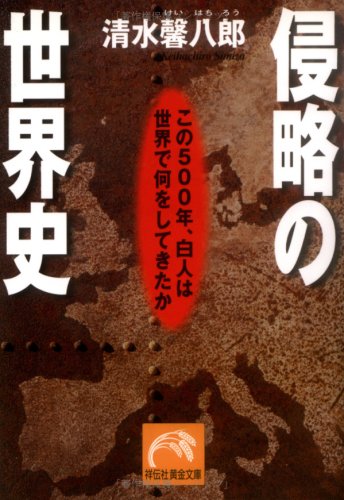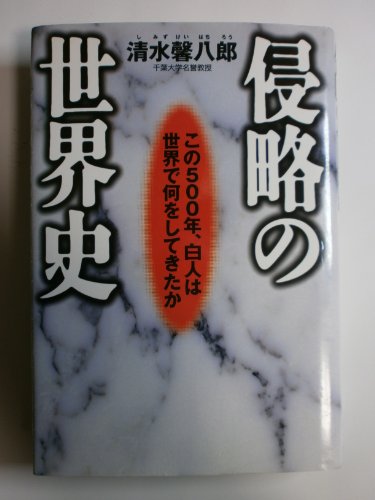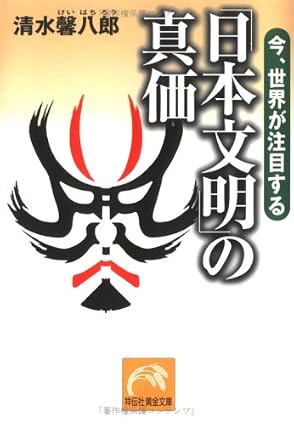
It's a book I read over 20 years ago and it fell out of my mind. Normally, after writing a review, I donate it to a nearby library, but I only put this book on the bookshelf, and I decided to reread it after a long time. It was written quite a while ago, but it describes the splendor of Japan and the differences from the Western world and neighboring countries from a civilizational point of view.
By reading this book, foreign languages (English and Chinese) were the focus when I was a student or office worker, but now that I have time and mental time to spare, I wanted to try my hand at Japanese and classical music.
Below are the points I was concerned about.
・Separated from humans and animals, we chose 5 reasons why humans are: 1) humans are animals that adapt to the environment and use them, 2) they are hand animals, 3) they are animals of time, 4) they are language animals, and 5) they are religious animals. Next, cultural differences between Japan and foreign countries were contrasted for each of these 5 elements. I thought that Japan has a culture of hands, that Westerners have a culture of feet, and furthermore, I wanted to test the differences between Japanese and Western languages in languages, and the contrast between polytheism and monotheism in religion, so I thought that Japanese things that are different from foreign countries should naturally emerge depending on the above. Through this analysis, it became clear that Japanese civilization was neither a derivative civilization branching off from the Chinese civilization as previously thought, nor was it a civilization imitating Western civilization (p4)
・In this book, culture and civilization are used almost interchangeably. Culture is the sum total of how people live and how they go. This has gained centripetal value, and when it affects others across regions or contrasts the cultures of countries, it is treated as a civilization (p6)
・The geographical location of the Japanese archipelago, which is inseparable from the continent, was not swallowed up by the invasion of the continent, and freedom of selection was given to civilized imports. This unbreakable position of quasi-independence has spared the central civilization from falling together even if it declines (p20)
・The national project of dispatching envoys to the Tang Dynasty was stopped in 894 of Emperor Uta due to suggestions from Sugawara Michizane, and formal diplomatic relations with China remained interrupted for about 1000 years until 1871, when the Sino-Japanese Treaty of Amity was concluded at the beginning of the Meiji period (p26)
・For a long time, East Asia has maintained stability for the time being under the tribute order by a huge traditional cost nation called the Chinese Empire. This order was broken from 1842, when the Qing Empire was defeated by the Western powers of England in the Opium War (p38)
・A concession was a place that guaranteed freedom of speech, and it was also a place that guaranteed the safety of life and property. It was Deng Xiaoping's reform and opening up policy that used the principle of the economic effects of the Shanghai Concession (p46)
・Railways became popular in Japan because of the long and narrow shape of the land and because population settlements were arranged linearly along rivers not only along the coastline but also inland (p69)
・The characteristics of Japan's climate can be summarized in the following 6 concepts when compared to the world: 1) fertility, 2) delicate, 3) variety, 4) vitality (full of vitality), 5) moisture (fresh and moisturized), and 6) warmth (p75)
・Since Westerners are surrounded by harsh environments, they either see nature as something in conflict or an object to be conquered, or Japanese people appreciate and respect nature as something that gives them the blessings of living, and they have lived in harmony with it. Therefore, even when it comes to religion, they become monotheistic religions like Christianity and Islam, which have exclusive and dictatorial conquest ideals. Japan, on the other hand, does not go against nature, sees and reveres gods in nature, and becomes a polytheistic Shinto with a tolerant idea of being one with nature (p93)
・Even before they knew that dirt is an effect of microorganisms, Japanese people empirically knew how to clean (sterilize) these with salt, fire, water, etc. Thus, salt, fire, and water were sacred and became essential for God's events (p102)
・Humans believe in the existence of transcendental absolute beings, sacred, and spiritual things, fear and respect them, have a sense of faith that relies on their power, and have performed various religious rituals for that purpose. Humans are destined to be religious animals, and this is what makes them different from animals. The state of progression and religion varies considerably depending on race, ethnicity, and country. This difference is a fundamental factor that causes differences in history, culture, politics, and society (p196)
・Shinto doesn't have the 3 conditions that modern religion should have; 1) specific gurus, 2) sutras, 3) missionaries, and there wasn't even a concept of religion in Japan until the Meiji era when Western religion was translated as religion (p198)
・What is characteristic of Shinto and must not be forgotten is its view of labor; Amaterasu Omikami weaves, male gods cultivate fields, and Inari grabs bundles of rice and carries them. The emperor, who is the supreme Shinto priest, represents the people planting and harvesting rice, and the empress keeps silkworms. Shinto is the only religion in the world where God works. In Christianity, labor is regarded as God's punishment due to despicable labor. Therefore, the white descendants came up with the idea that they would let livestock or slaves do bad work and live a playful life themselves. In contrast to this, in Japan, working is one of the joys of life, and they don't disdain working by saying “happiness” (p204)
・Humans were able to recognize time because humans artificially divided it. Humans stopped the Earth revolving around the Sun without permission, and decided that this was the 1st year of AD or New Year's Day. It is human duty to limit something limitless in this way (p148). Time is recognized by dividing, and awareness of time is heightened. The point of valuing time and making effective use of time Also, by dividing time, goals are determined and life becomes planned (p150)
・Japanese has various characteristics not found in other languages; 1) Whereas Western is mainly expressed using only 26 characters of the alphabet, Japanese is an extremely rare language that has 3 types of characters, katakana, and kanji, and can be freely combined and used; 2) Western is a combination of phonetic characters, and while Chinese is a combination of ideographs, Japanese combines kanana phonetic characters and kanji ideographs Yes, 3) At least 3 expressions are used for the exact same noun or thing. Japanese (Yamato language), Chinese, and Western languages (p177)
・Why was Japan able to accept European civilization so quickly compared to countries in Southeast Asia and the Middle East? That is because when Japan came to accept export culture in the Meiji period, there was a medium called kanji that filtered European language once. That's because I was able to incorporate the two kanji words into Japanese as one word (p189)
・Christianity has become a convenient religion for nomads and hunters who live by killing livestock. If they invade a multi-ethnic group or set up a war and win, that nation is killed or enslaved, and slaves are not humans, and they are treated in the same way as livestock of cows and sheep. Slaves are domestic animals, so they are selfish or killed, and I don't feel “terrible” or criminal at all. Humans that God made to look like themselves are white people, and since black people are beasts that insult God, the logic is that it is God's will to exterminate them (p210)
・In order for one person to exist, two parents called parents are necessary, and if you go back to before your teens, the number of ancestors is in the 1000 range, and it exceeds 1 billion before your 30s. However, it is estimated that the number of Japanese people who have lived on Japanese soil since the time of Emperor Jimmu 124 generations ago is only 4 to 500 million. Therefore, if you share your parents and ancestors with each other over and over again, the numbers don't match unless they are relatives at our store. Everyone in Japan didn't have a self unless they collided with the Emperor at some point (p220)
・The emperor's first job was to “put the Shinto rituals first and leave others behind.” He was satisfied with just being silently carried on; his second job was to preserve Japanese culture and traditions, pass this on to future generations without error, create a calendar, and have a “era power” to change the times (p223)
・Even if kanji, ritsuryo system, Buddhism, and Confucianism were imported from China, they categorically rejected the Yishō revolution, kagyo, kankan, foot, hair, patriarchal society, and cannibalism (p240)