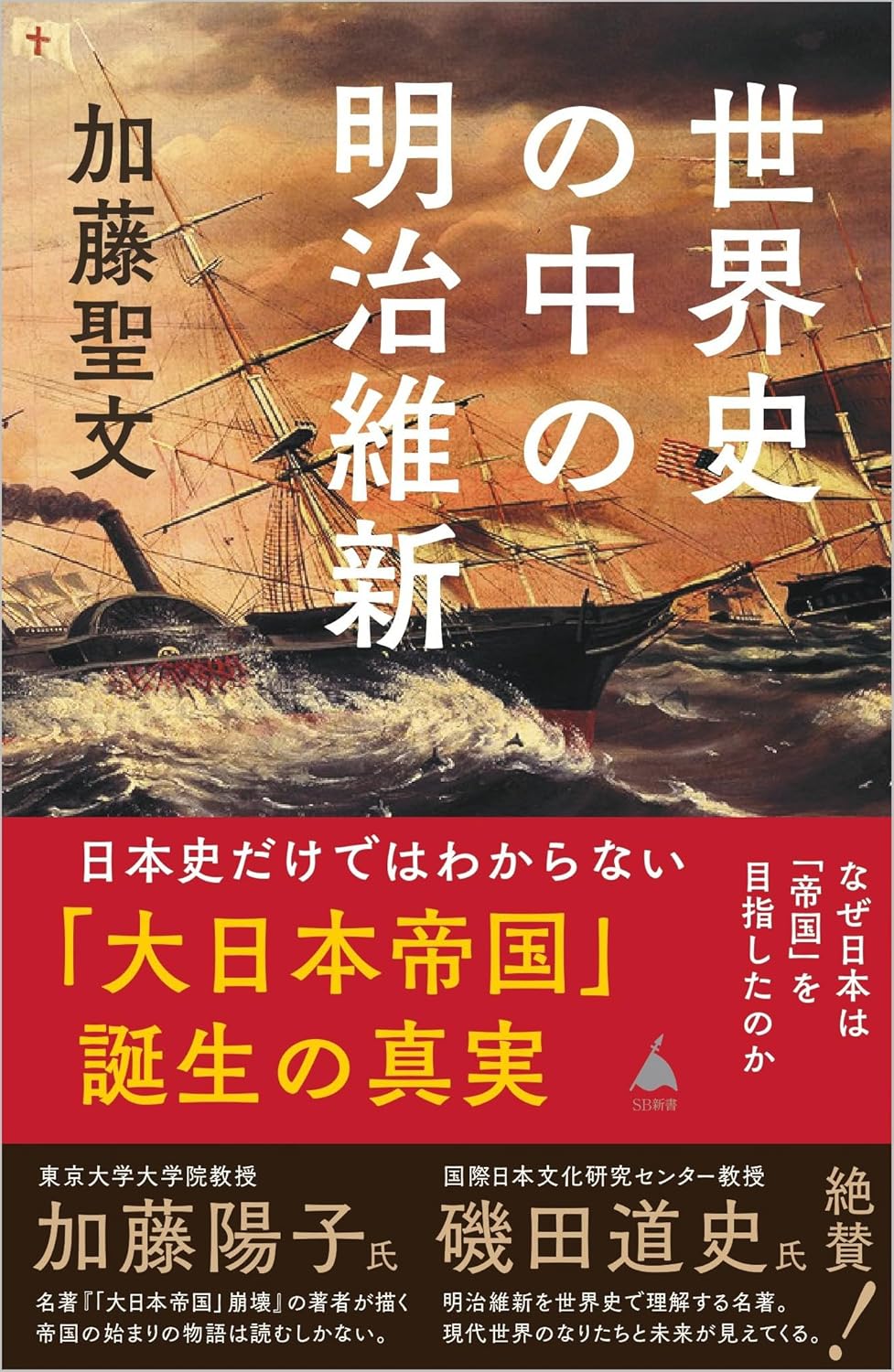
This book deciphers why the international order, which has been maintained against the backdrop of American power, fluctuated after World War II, and how the world centered on great powers called “power is justice” is reappearing from about 30 years after the end of the Cold War. What the author cites as a turning point is the attitude that “America is not the world's police officer” shown by President Obama in 2013. The author introduces the view that this has become an “invitation” for Putin and Xi Jinping that America does not intervene in maintaining world order as much as before (p18).
However, America's retreat did not begin suddenly. An investigation showing that the “war on terrorism” after 9/11 spanned over 80 countries, and war costs reached 8 trillion dollars is introduced (p33). America, which won the Cold War and became the sole superpower, exercised its power all over the world, while unilaterally withdrawing from the ABM Treaty in 2002 (p80), and invaded Iraq in 2003. Furthermore, the expansion of Western influence into the former Soviet bloc progressed, and the author sorts out that the NATO membership issue between Ukraine and Georgia definitively worsened the relationship between Russia and America (p95).
On the Russian side, there is an awareness of “recovering lost ground” after the collapse of the Soviet Union. When the Soviet Union collapsed in 1991, nuclear weapons were left in Ukraine, Belarus, and Kazakhstan, but the 1994 memorandum promised respect for territory and sovereignty instead of abandoning nuclear weapons. Nevertheless, Russia annexed Crimea in 2014 (p37). The author points out that even during the 2022 invasion of Ukraine, Putin was aware of his right to self-defense under the UN Charter and explained “special military operations” as actions for self-defense (p269). Here, the clash between order based on law and order due to the power of a major power is shown.
Meanwhile, America itself also changed from within. Companies and some elites gained huge profits due to globalization after the Cold War, but the author argues that the workers' class, particularly part of the white middle class, which has conventionally supported American prosperity, lost their economic and social status due to overseas transfers of manufacturing industries (p58, 306). The author positions Trump's victory in 2016 as a rebellion against urban elites by workers, farmers, and non-elites, as a “reconquest = recovery of lost land” due to the “losers” of globalization (p302).
There, not only economic disparities, but also anxiety surrounding race and culture overlaps. In the past, America was overwhelmingly a white-centered society, and it is said that white people occupied 89% of the population in 1956. After that, the social structure changed drastically through immigration law revisions and civil rights movements (p196). The author also touches on the prediction that white people will divide half of the population around 2045, and argues that this change in population structure has created a sense of “losing their country” in some white people (p185). The backlash against political correctness is also depicted as a response to such cultural changes (p190).
A similar rift exists in Europe. It is introduced that in 2022, when the invasion of Ukraine began, a large number of foreigners flowed into Germany, and their settlement and social integration became new issues (P211). The movement of people across national borders is a symbol of globalization, and at the same time, it is also a factor that strengthens nationalism and xenophobic reactions in each country.
The keyword that runs through this book is “reconciliation,” or “recovery from lost ground.” Russia is trying to regain its status as a major power lost due to the collapse of the Soviet Union, China's national power and influence before past humiliation, and some forces within America are trying to regain their economic and cultural superiority before globalization. Even though the direction is different, the feeling of “regaining what we once had” is depicted as a common factor driving modern politics.
What the author is concerned about beyond that is a world where multiple major countries form their respective spheres of influence. There, the rule of law is not always prioritized, and “law of the jungle” spreads, and “power is justice” may become the new normal (p316). The American-centered order, which has continued for about 80 years since 1945, was not established naturally, and has been artificially supported by America's overwhelming power and will. Therefore, there is no guarantee that it will continue in the same form in the future (p318).
After the war, Japan gained security and prosperity within this American-centered alliance order. However, the author argues that it is unlikely that America will continue to provide the same protection as before for the next 80 years. Then, instead of presenting a simple prescription in response to the question “what should Japan do then,” the book concludes by raising the issue** “you have to find the answer yourself” ** (p318).
The core of this book is not to view the current turmoil in the world as a sudden incident, but rather to capture it as a result of the accumulation of American actions after the Cold War, Russia and China's sense of recovering lost land, and domestic disparities and cultural backlash created by globalization. The author's basic point of view is that in order to understand the background of the revival of “power is justice,” it is necessary to see not only conflicts between nations, but also the sense of loss that has accumulated within each society.
summary
Why was “power is justice” revived in modern world history