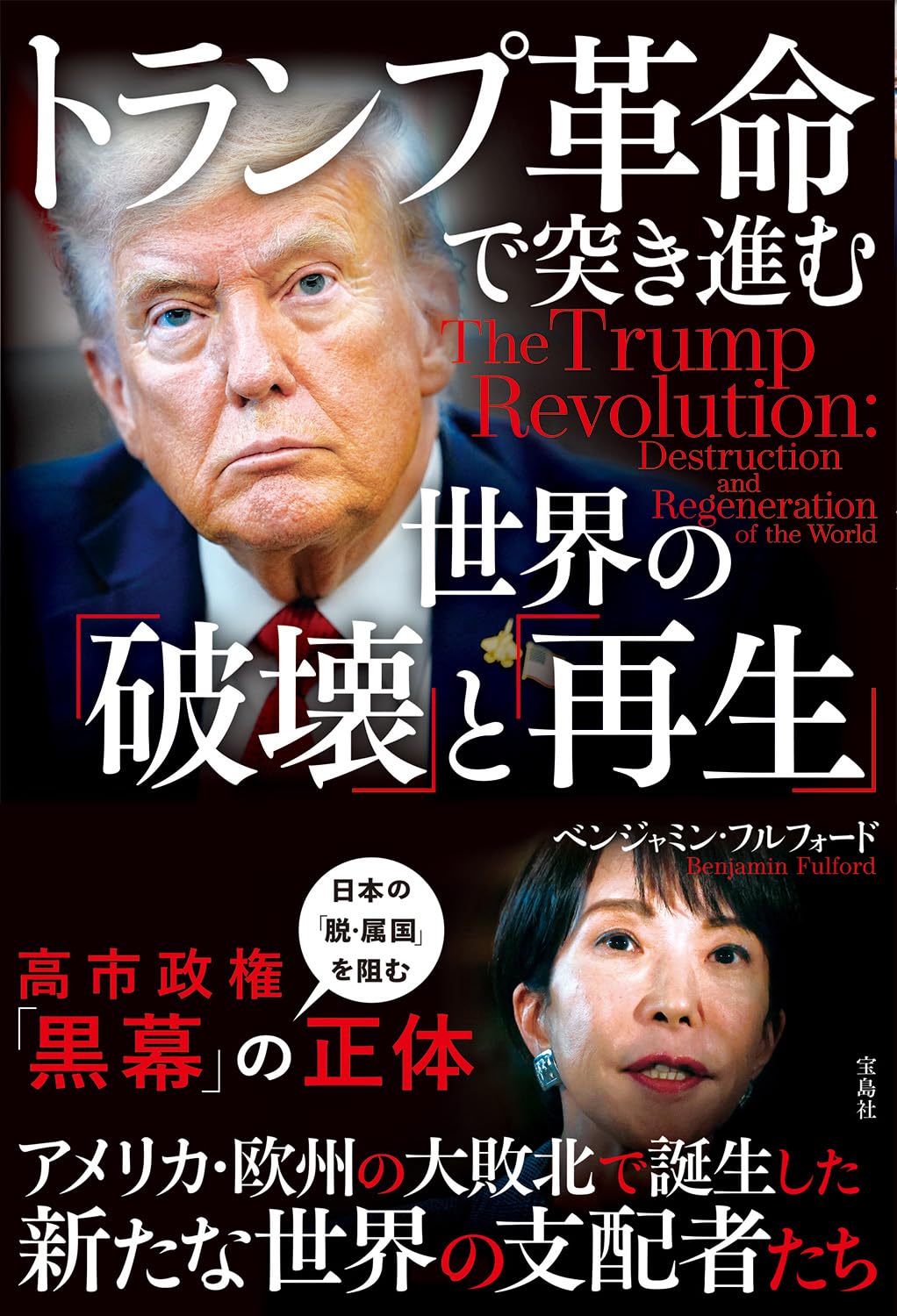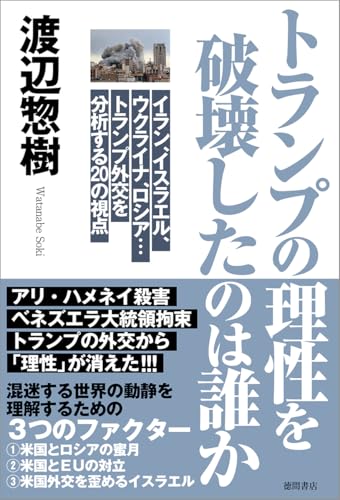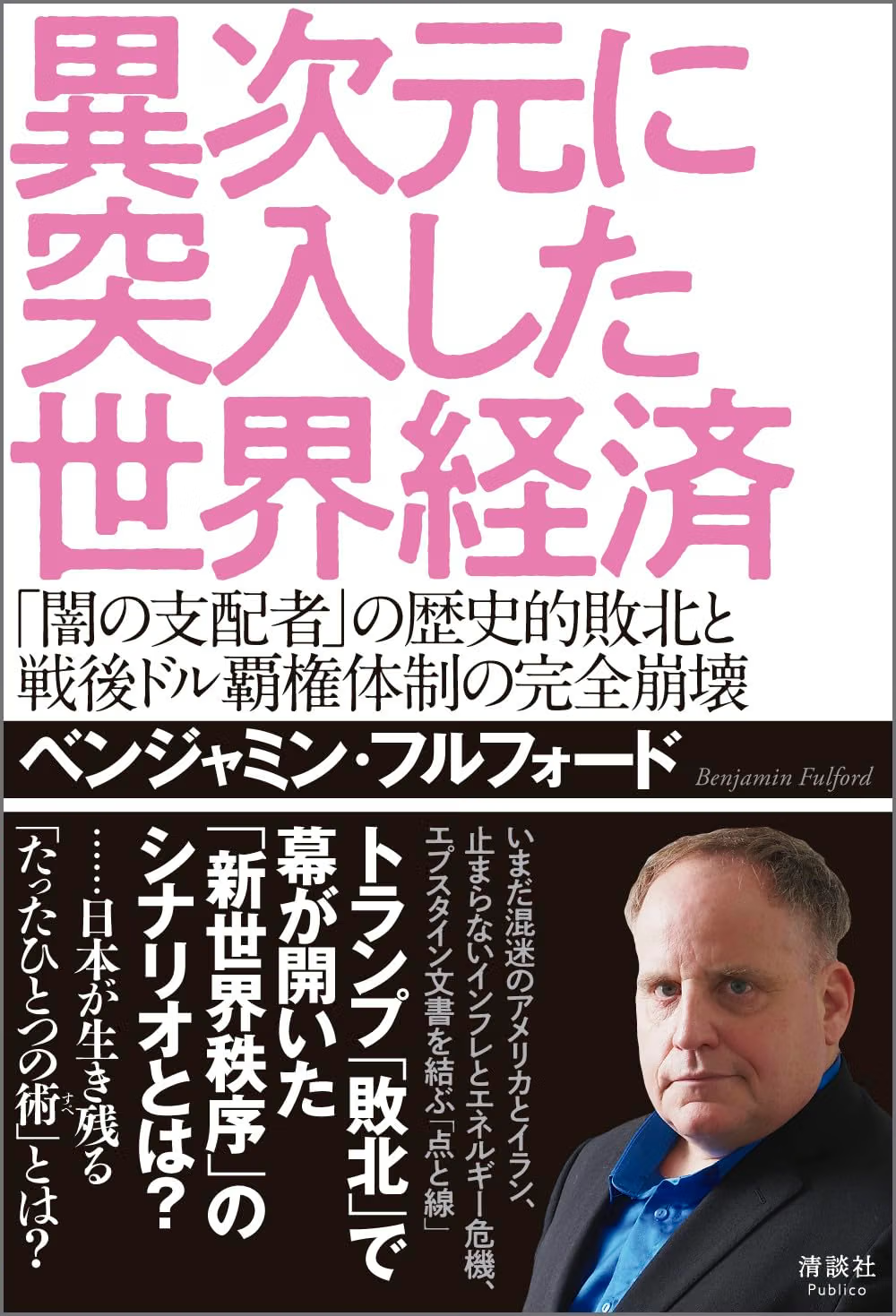
The starting point of this book is an awareness of the problem that changes in politics, finance, security, resources, food, information, and technology currently occurring in the world cannot be understood by looking at them separately as individual news. The author believes that these are intricately linked and form one major flow (p3). Furthermore, the theme that runs through the entire book is positioned as “revolution and change” (p6).
What is at the center of this is the weakening of the conventional international order centered on America. According to the author, the American government has fallen into a serious shortage of funds, and countries around the world are no longer buying US bonds as before. As a result, the importance of physical assets such as gold, silver, and petroleum has rapidly increased, and it is said that the Trump administration is also keenly aware of securing resources (p25). Meanwhile, with regard to petroleum in Venezuela, it is said that the managers of major US oil companies showed a negative attitude, saying that the market is already oversupplied and that if new development is promoted, prices will simply fall (p27).
The author places importance on gold as a symbol of such changes in currency and finance. This book states that as of 2026/2, the amount of gold held by central banks around the world surpassed the amount of US bonds held for the first time in decades, and became about 3.9 trillion dollars of US bonds compared to about 5 trillion dollars of gold (p82). For the author, this is an event showing a shift from a financial order centered on dollars and US bonds to an order that emphasizes physical assets.
Furthermore, the author also takes the Trump administration's tariff policy as an example of America's weakening. President Trump has insisted that trade partners bear tariffs, but according to the New York Federal Reserve Bank report, it was reported that US companies and citizens bore 94% of that burden for the first 8 months after the tariff was raised (p82).
What accounts for a particularly large proportion of this book is the military and resource issues surrounding the Middle East and Iran. The Strait of Hormuz is an important transportation route not only for oil, but also for natural gas and nitrogen fertilizer. According to the author, fertilizer prices in the United States rose drastically due to the effects of the blockade, and farmers were hit by the double impact of droughts and soaring fertilizer prices (p47). This shows that military conflicts are directly linked not only to energy, but also to agriculture and food issues.
Also, in this book, attention is paid to the mechanism of settlement via China. The author states that even though oil is ostensibly exported from China to Europe, oil is actually transported directly from the Middle East to Europe, and there are cases where Chinese banks are responsible only for settlement (p55). Here, changes have been suggested in which the logistics of resources themselves and the financial system that controls settlement have begun to move separately.
The author develops further advanced claims about military clashes in the Middle East. It is written that America and Israel were hit hard by the war with Iran, were unable to seize air supremacy over Iran, and the US Navy and aircraft carriers also withdrew from the Middle East (p119, p121). Also, it is assumed that there were movements within the US military that did not comply with the administration's orders, and it is assumed that America was eventually driven in the direction of accepting peace terms with the Iranian side (p128, p136). These are the author's assertions in this book, and it is necessary to check with other sources when understanding international situations.
However, the core that the author is trying to show from this series of descriptions is clear. This means that the power of America, which has led the international order against the backdrop of overwhelming military power, has weakened, and as a result, the behavior of Middle Eastern countries is also changing. The author sees that the reason the UAE and Saudi Arabia are distancing themselves from America and improving relations with Iran is also because America is no longer able to provide security as much as before (p118).
At the same time, conventional relationships with American allies are also changing. In this book, it is argued that Canada, Germany, Japan, the United Kingdom, etc. are showing movements to reduce dependence on American-made weapons, and that the conventional US power base of petroleum, military supplies, and pharmaceuticals is fluctuating (p99). Furthermore, the movement to build a unique security system is progressing in Europe, and it is the author's view that the conventional “West centered on America” framework itself is collapsing (p105, p201, p204).
Even when it comes to huge investments in AI, the author doesn't see it as simply a technological innovation. Commercial profits alone cannot justify huge investments, and they argue that the real aim is citizen surveillance and central management of society using AI (p59). This point also shows the book's viewpoint that “politics, finance, information, and technology are connected into one.”
Amidst these global changes, the last question the author asks is Japan's career path. Japan assumes that it is necessary to review its dependence on the United States so far and rebuild its own national strategy (p248). Now that America, China, Russia, Europe, the Middle East, and emerging countries each operate with their own interests, it is said that diplomacy simply following one country would be a big risk (p253).
What can be read from this book is that the author sees the present not simply as economic fluctuations or international political turmoil, but as a “revolutionary period” ** when the post-war American-centered political/financial/military order itself changes. The biggest feature of this book is that it looks at seemingly separate issues such as dollars, US debt, petroleum, military power, alliances, food, and AI as a single structural change. Also, with regard to Japan, it poses to readers the question that it is necessary to proactively design one's own interests and security while building relationships with multiple forces, rather than “which major power to follow.”