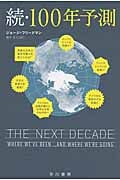
・Today's world system revolves around America, just as England was the center in the era until World War I. The long-term strength of America was discussed in the 100-year forecast, but this time (10-year forecast), America's weakness is written. This weakness is not a problem in the long run, and time will resolve most of them (p25)
・America must come to terms with Iran, just as it reached out to China in the 1970s (p30)
・Germany is coming to the conclusion that its interests are more consistent with Russia than its European neighbors (p31)
・While Europe was on the brink of war, Congress and citizens wanted to maintain neutrality, but Roosevelt sold arms to France and promised to England that merchant ships would be protected by the American Navy, which violated neutrality (p50)
・Military intervention is used as a last resort only when the balance of power is broken and allies are unable to deal with the problem (p57)
・There is no question that the cause of the fall of the Roman Republic was not a coup d'état, but rather a huge amount of bribes from citizens and foreigners to the capital of the empire. (p61)
・Treaties, missions, budgets, and a formal declaration of war require congressional approval, but only the president has command of the military. (p65)
・The United States bombed the Taliban base in September 2001, but it made a deal with an anti-Taliban organization and the Northern Alliance supported by Russia. (p101)
・The Ottoman Empire conquered Constantinople in 1453 and controlled most of the territory that fell into the hands of Alexander the Great in the 16th century. North Africa, Greece, Balkans, Eastern Mediterranean coast (p134)
・There is a risk that Iran will become a nuclear power, and there is a possibility that Turkey will turn into a powerful regional power and change its close soft relationship with Israel (p162)
・The three pairs of equilibrium in the Middle East are the Arab (Syria, Lebanon, Egypt, Jordan) versus Israel, India versus Pakistan, and Iran versus Iraq (p165)
・Turkey has the power to counter Iran within the next 10 years, no matter what actions the US takes. It is the largest economy in the Middle East, and other than Russia and the United Kingdom, it is probably the strongest in Europe (p180)
・After the collapse of the Soviet Union, the vast empire held together by the communists disintegrated, and only the Grand Duchy of Moscow (and Siberia), which was the center of the empire, remained in the Russian government. The Russian Federation weakened, but it persisted even so (p185)
・Russia had been aiming for an industrial power comparable to Europe and the United States for over a century, but Putin realized he would never catch up and switched to a strategy that focused on natural resource development and exploration (p188)
・American rivers connect rural areas with ports that serve as food distribution hubs, but Russian rivers only act as barriers. The Russian emperor, railway bonds of imperial Russia, and even Stalin were unable to resolve this issue (p197)
・There is a dark shadow in Poland that when it was invaded by Germany in the early days of World War II, England and France reneged on their promise to protect Poland from Germany (p205)
・No matter what happens to Germany, it is important for America to maintain a close bilateral relationship with Denmark, which blocks the exit from the Baltic Sea. Norway is also meaningful because Cape Nordkapp is a base to stop the Russian fleet in Murmansk (p208)
・Since the discovery of the new continent, Europe has been divided into 4 regions. Atlantic Europe, Scandinavia, Southeast Europe, and Russia (p216)
・At the time of 1900, there were 12 empires in the world: America, Belgium, England, Denmark, the Netherlands, France, Germany, Italy, Japan, Portugal, Russia, Spain (p 220)
・The EU had two purposes: 1) integrating Western Europe as a limited union and linking Germany and France to resolve the German issue and reduce the risk of war; 2) a device to bring Eastern Europe into European society (p225)
・In America, the American Civil War recognized that the federal government had sovereignty, especially absolute sovereignty in diplomatic matters. With the victory of the Federation, the assertion of the Confederate States that withdrew that each state should have sovereignty was rejected, and the EU still has a federated model (p226)
・At the NATO meeting, when America requested defense support from Turkey, which supports the American military in the Iraq War, the overwhelming majority of countries acquiesced, but Germany, France, Belgium, and Luxembourg opposed it. NATO is unanimous (p238)
・If you consider that most of China's population is concentrated in an area within 700 kilometers of the eastern coast, the image of an island hits the mark. The reason why the population is so concentrated is that water is hard to come by. 380 millimeters is the minimum amount of rainfall necessary to maintain the population (p253)
・In order for Japan to secure stable raw materials, Japan needed strong naval power. America threatened Japan's security by expanding its naval power as a means of defense against Japan. The result of this mutual threat was the Pacific War (p255)
・It is calculated that China has a population of 600 million people with an annual household income of less than 1000 dollars, and one family lives on less than 3 dollars a day. Another 400 million people are under $2000. 80% of China lives in the same poverty as in sub-Saharan Africa (p259)
・The cohesive Japanese society maintained full employment at the expense of growth, so far from wasting 10 years, it protected the country's core interests, but in the next 10 years, it will be impossible to adopt a method for full employment by endlessly increasing public and private sector debt (p263)
・Although India has a central government, each state that makes up the country has its own laws, and some of them hinder economic development (p277)
・In the next 10 years, America will be distracted by other issues, so the two major Asian powers (China and Japan) will follow their own path without being influenced by external forces (p280)
・Angola, like Brazil, has Portuguese as its native language. Brazil not only dominates the South Pacific but could also be located along the African coast (p291)
・If I had asked a sensible person in 1800 who would be in control of North America 200 years from now, they would have answered Mexico. The developed countries were also strong in military strength. (p293)
・America is facing two problems: illegal immigration from Mexico and illegal export of narcotics. What underlies it is the fact that the American economic system demands it. If you enter the country illegally, you can definitely find a job (p295, 297)
・Areas where Mexican immigrants are flowing in are often former Mexican territory. Even if Mexicans emigrate, this does not necessarily mean that they will break ties with their home country. There is almost no need to adapt to different cultures (p296)
・A reasonable and conservative estimate of narcotics profit margins is 90%, and illegal trade of 40 billion dollars brings profit of 36 billion dollars. Three times the profit from legal exports of 130 billion dollars (13 billion dollars) (p299)
・Since the cost of narcotics before they reach America is very low, there is almost no impact on trade value even if the cargo is European. Will be refilled quickly (p300)
・The best strategy America should adopt is to pretend that it is blocking the inflow of immigrants with all its might, and make arrangements so that such efforts definitely fail; this is the illegal immigration strategy that America has adopted (p301)
・America does not allow any province in Canada to link up with America's hostile forces; a possible scenario is when Quebec becomes independent. (p306)
・The two issues that will affect the next decade are population dynamics and science and technology (p321)
・Technological breakthroughs in two important fields where development has not been seen for a long time are essential for useful robot development: microprocessors and batteries (p325)
・In the next ten years, the two technologies that are merging will come to an end. One is the communication revolution, and the second is disruptive digital technology. (p326-329)
・What is necessary with digital technology is to take an aggressive attitude and use data to work and change reality (p330)
・The problem is that both desalination and water transportation require unreasonable costs and huge amounts of energy. This energy cannot be obtained with currently available technology. New approaches are needed, such as space solar power generation (p335)
・In the short time frame of 10 years, decisions made by each individual and individual holding political power have weight, and this was hardly taken into account in future scenario preparation over the long range of 100 years. (p361)