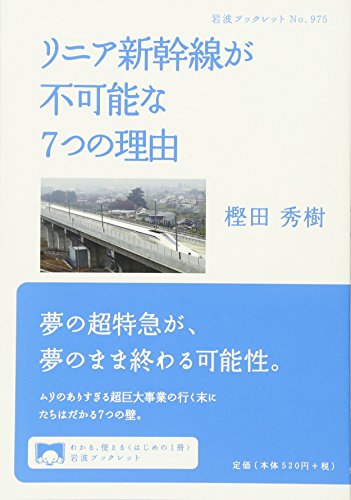
・7 reasons, 1) huge amount of remaining soil, 2) dry water, 3) evictions of residents, 4) ensuring safety for superior customers, 5) uranium deposits, 6) sloppy assessments and residents' opposition movements, 7) difficult construction and profitability (from the lottery)
・What is being determined as a disposal site for residual soil is the site of a silica sand (glass raw material) mining site (P15) of the Seto City Silica Mining Cooperative Association
・In the Asahi Ozawa district, where dry water occurred in various parts of the Yamanashi Experimental Line, JR Tokai paid the electricity bill (10 million yen) for 20 years of pump operation (P19)
・Investigations were carried out only in Uenohara City, Fujimi Town, and Hayakawa Town; Kofu City, Chuo City, and Minami Alps City have not been investigated; no environmental assessments have been carried out for the Oyanagi River, Fuefuki River, and Kamanashi River where the linear line passes (P24)
・Linear lifts the car body 10 centimeters from the ground with strong superconducting magnets and runs at 500 kilometers. It consumes 3 times more electricity than a bullet train (P31)
・Since linear causes a superconductivity phenomenon, four freezers installed in each vehicle are cooled to -269 degrees with liquid helium, superconducting magnets are stored, and electric current is applied to coils installed on walls (guideways) on both sides where the linear runs to make them electromagnets, suction and repulsion occur simultaneously between the vehicle's superconducting magnets, and the vehicle moves, and electromagnetic waves are generated (P31)
・Japan's largest uranium deposits are scattered in the Tono area of Gifu prefecture, and uranium mining was also carried out in the 1970s for the purpose of self-supply of nuclear fuel, and although it is not being carried out now, uranium is still buried underground (P36)
・The independent administrative agency (Railway Construction/Transportation Facility Equipment Support Organization) that constructs JR, invested a total of 3 trillion yen into JR Tokai in 2016/11/17, and was left unchanged for 30 years (usually 5 years), the repayment period was 10 years, and interest was 0.6-1% (usually 3%) unsecured (P56)